

The Amazon FBA shipping service has completely transformed how online sellers operate. Instead of managing warehouses, hiring delivery staff, and handling customer complaints, sellers can now leverage Amazon’s powerful logistics infrastructure. But how exactly does this system work? Who pays for shipping? How much does Amazon really take from each sale?

If you are serious about building a scalable eCommerce business, you must understand every layer of the Amazon FBA shipping service. In this professional, easy-to-read guide, we will break everything down step by step. We will explain costs, shipping carriers, common mistakes, and practical tools you can use to stay profitable. By the end, you will clearly understand whether FBA is the right model for your business.
What Is Amazon FBA Shipping Service?
The Amazon FBA shipping service stands for “Fulfillment by Amazon.” It allows sellers to send their inventory to Amazon’s fulfillment centers. Once inventory arrives, Amazon stores, picks, packs, and ships the products to customers.
In addition, Amazon handles:
- Customer service
- Returns and refunds
- Delivery tracking
- Packaging
- Prime eligibility
Therefore, you focus on sourcing, branding, and marketing while Amazon manages logistics.
How Does Amazon Shipping Service Work?
The Amazon shipping service operates through a highly automated fulfillment network.
Step 1: Create A Shipment Plan
Inside Seller Central, you select your products and quantities.
Step 2: Send Inventory To Amazon
You ship products to Amazon warehouses using partnered carriers or freight forwarders.
Step 3: Inventory Becomes Active
After Amazon receives and checks inventory, your listing becomes available for customers.
Step 4: Customer Places Order
Amazon automatically processes the order.
Step 5: Amazon Ships The Product
Through its internal network or external carrier partners.
Step 6: Returns Are Handled By Amazon
Amazon processes customer returns and refunds.
This structured process makes the Amazon FBA shipping service efficient and scalable.
Who Pays For Shipping On Amazon FBA?
This is one of the most important financial questions.
The Seller Pays, But Indirectly
When using Amazon FBA shipping service, sellers cover:
- Inbound shipping cost (sending inventory to Amazon)
- FBA fulfillment fee
- Storage fees
- Referral fees
Although customers see “Free Prime Shipping,” the cost is included in the FBA fulfillment fee structure.
However, because Amazon negotiates massive shipping contracts, the cost per unit is often lower than individual sellers could obtain independently.
Who Handles Shipping On Amazon?
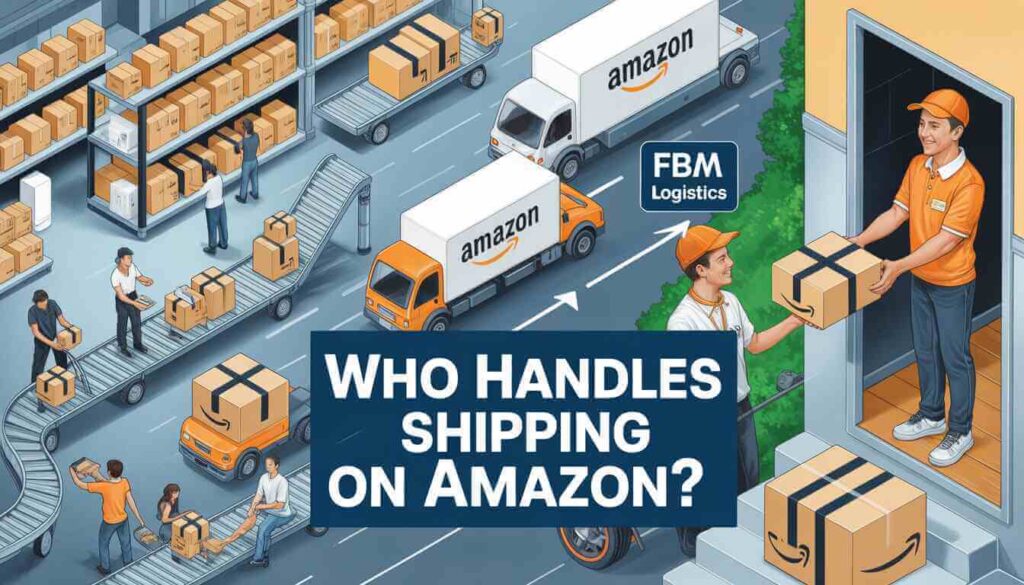
Who handles shipping on Amazon? The answer depends on the fulfillment method the seller chooses. When a seller uses the Amazon FBA shipping service, Amazon takes full responsibility for storing, packing, and delivering the product to the customer. In addition, Amazon manages tracking updates, customer service, and returns.
However, if the seller selects Fulfilled by Merchant (FBM), the seller handles shipping independently and chooses their own carrier. Therefore, Amazon can either manage the entire logistics process or simply provide the marketplace platform. Understanding who handles shipping on Amazon helps sellers choose the most profitable and efficient fulfillment strategy for their business model.
If you use FBA, Amazon handles all outbound shipping.
If you use FBM (Fulfilled by Merchant), you handle shipping yourself.
FBA Model:
- Amazon chooses carriers
- Amazon negotiates rates
- Amazon manages delivery
- Amazon handles returns
FBM Model:
- You select shipping carrier
- You pay negotiated rates
- You manage customer issues
Therefore, the Amazon FBA shipping service reduces operational complexity significantly.
Does Amazon Have Its Own Shipping Service?
Yes. Amazon has built one of the largest logistics networks in the world.
Amazon operates:
- Amazon Air cargo fleet
- Delivery vans through DSP partners
- Regional sorting centers
- Local fulfillment hubs
However, Amazon still partners with external carriers.
What Shipping Carrier Does Amazon Use?
Amazon uses multiple carriers depending on region and delivery volume:
- UPS
- FedEx
- USPS
- Amazon Logistics (AMZL)
However, Amazon increasingly prioritizes its internal delivery system to reduce dependency and control costs.
Do Amazon Use UPS Or FedEx?
Yes, but not as heavily as before.
Amazon strategically shifts shipping volume between UPS, FedEx, USPS, and its own network based on:
- Cost efficiency
- Delivery speed
- Contract negotiations
- Peak season capacity
Therefore, the carrier used for your shipment may vary.
Why Is Amazon Reducing Dependency On UPS?
Amazon has not fully stopped using UPS. However, it has reduced reliance.
Key reasons include:
- Cost control
- Faster internal routing
- Reduced contract risks
- Long-term logistics independence
By building its own delivery network, Amazon improves profit margins and service reliability.
How Much Does Amazon Take From A $100 Sale?
Let’s analyze this clearly.
Example: Product Sells For $100
Typical breakdown:
- Referral Fee (15% average) = $15
- FBA Fulfillment Fee = $6–$10
- Storage Fee = $1–$3
Estimated Total Fees:
$22–$28
Seller Receives:
$72–$78 (before product cost, ads, and taxes)
However, exact fees depend on:
- Product category
- Size tier
- Weight
- Seasonal storage rates
Use these tools to calculate precisely:
- Amazon FBA Revenue Calculator
- Helium 10 Profitability Calculator
- Jungle Scout FBA Calculator
These tools prevent margin miscalculations.
Biggest FBA Mistakes To Avoid In Amazon FBA Shipping Service
Even experienced sellers make errors. However, you can avoid these costly mistakes.
1. Ignoring Total Landed Cost
Many sellers only check referral fees. However, you must include:
- Product cost
- Shipping to Amazon
- FBA fees
- Storage
- Advertising
Failure to calculate full cost destroys profit margins.
2. Overstocking Inventory
Excess inventory leads to long-term storage fees. In addition, slow-moving products reduce cash flow.
Use inventory forecasting tools such as:
- Helium 10
- Jungle Scout
- SoStocked
3. Understocking Inventory
On the other hand, running out of stock kills ranking and sales velocity.
Therefore, balance inventory carefully.
4. Improper Packaging And Labeling
Amazon has strict packaging requirements. If you ignore these:
- Amazon may charge prep fees
- Shipments may be delayed
- Inventory could be rejected
Always follow FNSKU labeling rules.
5. Ignoring Shipping Optimization
Although Amazon negotiates carrier rates, inbound shipping still impacts profit. Compare:
- Amazon Partnered Carrier Program
- Third-party freight forwarders
Optimize for both cost and speed.
Advantages Of Amazon FBA Shipping Service
Prime Eligibility
Prime badge increases trust and conversion rate significantly.
Automated Logistics
You avoid warehouse management headaches.
Scalability
You can sell nationwide or globally without physical infrastructure.
Customer Trust
Amazon handles customer service professionally.
Disadvantages Of Amazon FBA Shipping Service
Less Operational Control
You cannot directly control packaging or carrier choice.
Storage Fees
Especially during the Q4 peak season.
Inventory Restrictions
Amazon may limit restock quantities.
However, despite these disadvantages, the Amazon FBA shipping service remains one of the most powerful fulfillment systems available to online sellers.
Recommended Tools And Resources For Amazon FBA Shipping Service
To operate professionally, use these resources:
1. Amazon FBA Revenue Calculator
Free official cost estimation tool.
2. Helium 10
Keyword research, listing optimization, profit tracking.
3. Jungle Scout
Product research and sales estimation.
4. Freight Forwarders
- Flexport
- Freightos
5. Inventory Management Tools
- SoStocked
- InventoryLab
These tools help you manage logistics, forecasting, and profitability efficiently.
Is Amazon FBA Shipping Service Worth It In 2026?
Yes, if you understand the cost structure.
The Amazon FBA shipping service allows automation, scalability, and professional logistics. However, you must calculate margins correctly, monitor inventory levels, and avoid common beginner mistakes.
If you treat FBA like a serious business instead of a side hobby, it can become a powerful revenue engine.
Frequently Asked Questions
1. Is Amazon FBA Shipping Service Good For Beginners?
Yes. It simplifies logistics and customer service. However, beginners must carefully calculate fees before launching.
2. Can I Choose The Carrier For FBA Orders?
No. Amazon selects outbound carriers. However, you can choose the carrier when shipping inventory to Amazon warehouses.
3. Does Amazon Reimburse Lost Inventory?
Yes. Amazon reimburses eligible inventory lost or damaged inside fulfillment centers.
4. How Fast Is FBA Delivery?
Most Prime orders arrive within 1–2 days. However, delivery speed depends on region and product availability.
5. What Is The Minimum Budget To Start FBA?
There is no official minimum. However, most sellers start with $2,000–$5,000 to cover inventory, shipping, and marketing.
Final Thoughts On Amazon FBA Shipping Service
The Amazon FBA shipping service is not just a shipping solution. It is a complete fulfillment ecosystem. It reduces operational stress, improves delivery speed, and enhances customer trust.
However, profitability depends on smart planning, accurate cost calculation, and disciplined inventory management. Use the recommended tools, monitor your margins, and treat your store like a professional brand.


Hello, I am an E-commerce Expert with extensive experience providing services to numerous e-commerce brands and individuals since 2017. My primary areas of expertise include the Amazon, Walmart, and Shopify marketplaces. Linkedin